
The 3pm Slump: The Truth About the Afternoon Productivity Dip and What Workplaces Can Do About It

Updated: Sep 4
By Steph Ley BSc DipION mBANT mANP mGNC | The Nutrition Advantage
It’s 2:45 pm on a Tuesday.
If you walk through almost any UK office or scroll through a hybrid team’s Slack channels, you’ll notice a distinct shift. The vibrant morning chatter has vanished. People are slouching lower in their ergonomic chairs, eyes glazed over, staring at a half-typed email.
Having worked with a wide variety of organisations across the UK, I've noticed the afternoon raid on the departmental biscuit tin seems to be a pretty universal occurrence — in fact, in polling across many of my workshops, 45% of employees admit to experiencing regular afternoon fatigue. (See the data below.)
In the afternoon, across offices, response times slow down, creativity stalls, and the atmosphere feels distinctly... heavy.
Welcome to the 3pm slump (also known as the afternoon productivity dip or 3pm dip).
The 3pm slump is the dip in energy, focus and motivation that hits most people in the mid-afternoon, typically between 2pm and 4pm.
It's driven by a mix of natural circadian cycling and metabolic fluctuations — not lack of willpower. For employers, it's also a quiet productivity killer, showing up as slower decision-making, more mistakes and dwindling motivation for the rest of the working day.
For many HR leaders and line managers, this daily dip in staff energy is accepted as a normal part of the working day. But as a workplace nutritionist who has delivered workplace workshops to thousands of UK employees, I’m here to tell you: it isn’t just a mild inconvenience—it is one of the single biggest hidden costs facing modern businesses today.
What the Problem Really Is: The Hidden Cost of the 3pm Dip
When we talk about lost workplace productivity, leadership teams usually look at sickness absence metrics. But there's a far quieter, more expensive problem hiding in plain sight: presenteeism.
According to the IPPR's 2024 Commission on Health and Prosperity, the average UK employee loses the equivalent of 44 full working days a year to presenteeism — being at a desk but biologically unable to focus or perform.
That works out to roughly 84 minutes of lost productivity per employee, per working day, on average across the year.
For individual businesses, this acts as a hidden productivity tax on every employee — often driven by everyday energy saboteurs like poor sleep, post-lunch glucose spikes and metabolic fatigue that impact focus long before anyone calls in sick.
HR professionals see the symptoms every day:
The "Kettle Pilgrimage": Repeated trips to the kitchen for caffeine or sweet fixes.
The Post-Lunch Slouch: Visible physical exhaustion, brain fog, and heavy eyelids.
Communication Friction: Slower email response rates, shorter tempers in afternoon meetings, and discussions that run long and go nowhere.
Why This Is a Growing Concern for UK Employers
While sick days cost UK businesses over £900 per employee annually, presenteeism — staff showing up but underperforming due to sub-optimal health — is thought to cost a business over 3-4 times more than sickness absence per employee.
Afternoon fatigue and energy dips are one of the most common everyday, unmeasured drivers behind this — the kind of low-grade depletion that doesn't show up in sickness stats but chips away at focus and output all the same.
Sources: IPPR Commission on Health and Prosperity, Vitality Healthiest Workplace Studies, Deloitte Mental Health Reports.
Lessons from the Field: Insights from a Workplace Wellbeing Facilitator
Interactive, anonymous polling is a core element of my wellbeing workshops, allowing staff to share their daily health hurdles without fear of judgement.
The data I see reinforces the extent of the 3pm slump: across the sessions I facilitate, roughly 45% of employees admit to experiencing afternoon fatigue on a regular basis.

Want to end the 3 PM slump across your team?
Our interactive, science-backed workshop, "ENERGY & FOCUS: The 3pm Slump Fix," gives your team practical tools, smart food-pairing strategies, and personalised toolkits to reclaim up to 84 minutes of lost daily focus.
Why is staff energy plummeting more now than ever before?
Blurred Work-Life Boundaries: Hybrid working and constant connectivity mean employees rarely switch off, leading to baseline central nervous system fatigue.
Peak Stress Levels: The CIPD's latest Health and Wellbeing at Work report found UK sickness absence has climbed to 9.4 days per employee per year — the highest level in over 15 years — with stress a significant driver of both short and long-term absence. Chronic stress keeps cortisol elevated at the wrong times, which throws off the very rhythm that's supposed to carry us smoothly through the afternoon.
On-going workplace stress can also contribute to compromised gut health which in this blog post explains how this can contribute to afternoon brain fog and fatigue.
Our body clocks are increasingly out of sync, thanks to less morning daylight exposure, screens late into the evening, and irregular sleep and meal timing — all of which blunt the natural cortisol and alertness rhythm that should be doing some of the heavy lifting for us.
Ultra-processed foods now make up more than half of the average UK adult's diet. Analysis of the National Diet and Nutrition Survey puts it at around 54–57% of calories. These foods are typically low in the fibre, protein and micronutrients, all those things that keep blood glucose, and energy, stable through the day.
Put simply: the slump was always there. Modern life has just turned up the volume.
The real business impact of the 3pm afternoon productivity dip — and it's bigger than absence
An energy-depleted afternoon workforce doesn't just look tired. It shows up as:
Lower output and missed deadlines
Poorer customer experience — slower, flatter, less patient interactions
Weaker collaboration — fewer people bringing energy or ideas to a 3pm meeting
Less creativity — depleted mental energy narrows thinking to the safest, easiest option
More mistakes, some of them costly, especially in industries such as medicine, construction, manufacturing, law or aviation
Research has found doctors are more likely to prescribe unnecessary antibiotics, and less likely to order important follow-up tests, in afternoon appointments compared with morning ones.
If mental fatigue can shift outcomes in consulting rooms, it's shifting outcomes in your business too — just less visibly.
What Causes the 3pm Slump? Is It Inevitable?
Some of this is simply biology.
There's a well-documented dip in alertness between roughly 2pm and 4pm that shows up even in controlled sleep-lab conditions, driven by the body's circadian rhythm rather than lunch itself.
Driven by our internal clock, our biological sleep drive temporarily rises in the afternoon. It's not something we're doing wrong — it's built in.
But this natural lull should not leave your team feeling like they need a micro-nap under their desk. Our modern lifestyle takes a minor biological dip and turns it into a full-scale energy crash.
The Science Behind the Crash

The Blood Glucose Rollercoaster: Eating a refined carb breakfast (cereal, toast) or a high-glycaemic desk lunch (shop-bought sandwiches, pasta pots) causes a sharp spike in blood glucose. In response, the pancreas floods the body with insulin to clear the sugar. This over-compensation experienced an hour or so later drives blood glucose below baseline—triggering intense fatigue, brain fog, and sugar cravings.
The Stress & Cortisol Loop: When stressed, your adrenal glands release cortisol, which mobilises glucose into the bloodstream. Followed by insulin spikes and a subsequent blood glucose slump, this leaves your stress response and metabolic health completely depleted by mid-afternoon.
The Brain on Low Fuel (The Cognitive Cost): Your Pre-frontal cortex is one of the first things to go off-line when there is sub-optimal glucose available in the blood. This can contribute to difficulty concentration and making decisions.
A famous 2011 study published in PNAS examining judicial decision-making found that judges' favourable rulings dropped from 65% down to near 0% as the session progressed toward meal breaks, spiking back up to 65% immediately after eating. When energy drops, our brains default to the status quo, make more mistakes, and lack critical thinking.
How Can You Prevent the 3pm Slump?
You can't eliminate the natural afternoon dip, but you can stop it turning into a full energy crash — mainly by stabilising blood glucose through the day and supporting your circadian rhythm. Here are the evidence-based tweaks that make the biggest difference:
Delay Your First Coffee by 90 Minutes: Waking up naturally clears adenosine (the chemical that makes you sleepy). Drinking coffee immediately, blocks remaining adenosine receptors; when the caffeine wears off later, that leftover adenosine hits hard—causing a severe 2pm crash.
Get outside in the morning. Natural light helps set the cortisol rhythm that carries alertness through the day.
Prioritise Protein & Fibre for Breakfast: Ditch sweet cereals and bakery items. High-protein breakfasts (eggs, Greek yogurt, smoked salmon, or nuts) stabilise blood glucose for the entire day.
Take real microbreaks through the afternoon rather than pushing through — even 60–90 seconds away from a screen can improve wellbeing and alertness.
Build a "Balanced" Lunch Plate: Reduce refined lunch carbs. Pair complex carbs with high-quality protein, healthy fats, and vegetables to slow down stomach emptying and prevent the afternoon post-prandial dip.
Use Your Muscles as a "Glucose Sponge": A brief 10-minute walk right after eating lunch allows your skeletal muscles to soak up glucose from your bloodstream without requiring excess insulin production.
Ditch Ultra-Processed Foods (UPFs): Recent studies show that high UPF diets directly contribute to neuroinflammation, brain fog, and chronic fatigue. Discover more about the link between processed office lunches, Gut health and neuroinflammtion in this blog post.
Address Key Nutrient Deficiencies: In my clinical practice, I regularly see busy professionals struggling with Magnesium and B-vitamin deficiencies—both of which are critical for cellular ATP (energy) production and stress regulation.
What Can Employers Do to Prevent the 3pm Slump?
Telling staff to "sleep better" or "eat healthily" doesn't work — real change happens when workplaces build an environment where high energy is the default choice, not an individual effort. That means four things: education, a better food environment, normalised movement and rest, and leadership that models it.
1. Educate & Empower (Not Preach)
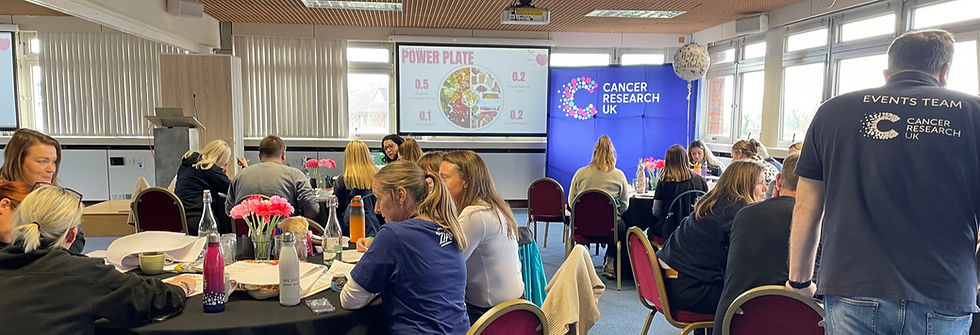
Empower staff with interactive, engaging education so they understand why their energy crashes. My signature Unstoppable Energy Workshop unpacks the science of blood glucose, stress, and sleep in a practical, zero-judgement way that inspires real habit change.
It’s consistently one of the sessions teams engage with most, because everyone recognises the 3pm feeling immediately (and the positive results from just a few tweaks).
2. Upgrade the Office Food Environment
Rethink the Biscuit Tin: Swap refined sugary snacks for non-UPF alternatives, raw nuts, seeds, dark chocolate, or oatcakes. (Check out our guide on Healthy Office Snacks for inspiration).
Hydration & Decaf Options: Offer high-quality herbal teas, decaf coffee, and attractive hydration stations.
Audit Your Canteen’s Menu: Make sure any office catering isn’t contributing to the blood glucose rollercoaster. Swap processed carbs for wholegrains paired with quality protein and a rainbow of fresh vegetables.
>>>I can come and review the food offerings in your workplace and suggest some quick wins for helping staff swerve the afternoon dip in productivity.
3. Normalise Movement & "Power Naps"
Get people outside. A morning huddle outdoors, an outside eating area, or walking meetings all help reset circadian rhythm and break up long stretches of artificial light and sitting. Getting daylight and movement dramatically improves cognitive focus.
Support the 20-Minute Power Nap: Research (including NASA sleep studies) shows a short 20-minute power nap in the afternoon can boost performance by 34% and alertness by 100%. Providing a quiet nap space or allowing flexible recharge time yields immediate productivity dividends. Sometimes the answer isn't fighting the dip it’s listening to what it’s trying to tell you.
4. Role Model from the Top
When senior leaders step away from their desks for lunch, go outside for a walk, or choose whole food snacks, it gives the rest of the organisation permission to prioritise their metabolic health too.
👉 For the fuller picture on building a workplace nutrition strategy beyond just the 3pm slump, see our Complete Guide To Workplace Nutrition.
Ready to Reclaim Your Team's Lost 84 Minutes?
Ending the 3pm slump isn't complicated, but it does require moving away from outdated wellness quick-fixes and focusing on proven, science-backed nutrition and lifestyle strategies.
As a workplace nutritionist having worked with organisations across industries from education to engineering,
I’ve found afternoon productivity is one of the few workplace wellbeing issues where small, evidence-based changes genuinely move the needle within weeks.
Book an Energy ‘Unstoppable You’ Workshop: built specifically to empower staff with real-life tools to help them get off the daily blood glucose roller-coaster and dodge the 3pm dip.
Discover how to stay in the 'Green Zone' for sustained all-day energy
Find out which 'healthy' foods are secretly draining you
Learn how to structure any meal for optimum energy
Choose to add-on bespoke nutritionist-approved recipes, tasters, supermarket picks and meal planners to help make it super easy to put into action

Download our free workplace resource: Access our Workplace Nutrition & Energy Toolkit complete with my exclusive bite-sized video outlining my top 5 tips for a day of steady energy.
Learn more about how our tailored Corporate Nutrition Workshops & Webinars can transform your team's focus, health, and productivity.
Frequently Asked Questions
Q: Why does the 3 PM slump happen?
A: The afternoon energy crash is a biological and metabolic response, not a lack of willpower. It is caused by a natural dip in your circadian rhythm between 1 PM and 4 PM, compounded by post-lunch blood sugar crashes (often from high-carbohydrate or processed lunches), dehydration, stress and prolonged sitting under artificial lighting.
Q: How does blood sugar balance affect afternoon energy levels?
A: When you eat meals high in refined carbohydrates or sugar, your blood glucose spikes rapidly. The body responds by releasing insulin to bring it down, causing a steep glucose crash an hour or two later. This rapid drop triggers fatigue, brain fog, irritability, and intense cravings as your brain searches for quick energy.
Q: How can employers help prevent the afternoon productivity dip?
A: Workplaces can support employee energy by providing protein-rich, low-glycaemic office snacks, encouraging hydration and movement breaks, optimising workspace lighting, and offering workplace nutrition education such as energy-boosting staff workshops and "Lunch & Learn"sessions to help staff build steady-energy meals.
Q: What are the best afternoon snacks to avoid a sugar crash? A: Choose snacks that pair complex carbohydrates with healthy fats or protein to slow down glucose absorption. Great options include raw nuts with a piece of fruit, apple slices with almond butter, plain Greek yoghurt with seeds, or hummus with raw vegetable sticks. See my guide for healthy work snacks you can get from your local supermarket.
Team's blood glucose stable but energy still tanking come 3pm? Could it be a gut-health issue? Check out our latest blog: Beyond Blood Sugar: Is "Silent Gut Inflammation" Hijacking Your Team's Afternoon Productivity?


Comments