
Workplace Nutrition: The Complete Guide to Healthy Eating at Work (2026)

Updated: Aug 21
By Steph Ley BSc, DipION, mBANT, mANP, mGNC | The Nutrition Advantage
The Corporate Nutrition Guide That Ends the 3pm Slump — and Builds a High-Performance Workforce
Table of Contents
1. Why Workplace Nutrition Matters in 2026
Workplace nutrition refers to the food, drink and nutritional education provided to employees during the working day. It encompasses everything from canteen menus and vending machine choices to nutrition workshops and food environment design — all with the goal of supporting employee health, energy and performance. Nutrition at work has never been more strategically important.
In 2026, the pace of work is relentless. We obsess over high-speed Wi-Fi, ergonomic environments, and the latest AI tools, yet we consistently overlook the most critical hardware in the building: the human brain and body.
A silent epidemic is undermining billions in human capital. It isn't about motivation or talent; it's about biology. Healthy eating at work — and the way we think about nutrition in the workplace — has never been more critical.
In my experience as a corporate nutritionist working with a wide variety of organisations — ranging from 10 to 5,000 employees — I've observed a recurring pattern of reliance on caffeine, ultra-processed grains, and high-glucose snacks. These aren't just dietary choices; they are survival mechanisms for a workforce caught in a cycle of:
• Energy Troughs: The all-too-familiar post-lunch slump
• Cognitive Fog: Difficulty maintaining 'deep work' focus
• Compromised Concentration: A systematic loss of precision and speed
The 'biscuit-tin and meal-deal culture' isn't just an office habit; it is a direct hit to your employees' biology, output, and ultimately, your company's bottom line.
The 2026 Tipping Point
We are at a unique moment. With the mainstreaming of GLP-1 medications, heightened public awareness of gut health, and widespread adoption of things such as time-restricted eating, employees are more conscious of their biology than ever before.
Yet this sits alongside rising rates of chronic disease and workplace stress.
There has never been a more critical time for businesses to bridge this gap — making it easier for staff to choose fuel that supports their health rather than undermining it.
→ The bottom line: Elite performers in sports and business have already discovered what the science confirms: optimal output requires optimal fuelling.
2. Why the 3pm Glucose Crash Is Your Biggest Overhead
84 minutes. That’s the productive time the average employee loses every single day to ‘presenteeism’ — being at a desk but biologically unable to perform. Over a year, analysis from the Institute for Public Policy Research (IPPR) shows this employees lose the equivalent of 44 days of productivity through presenteeism — a £3,600 annual ‘productivity tax’.
A significant portion of this loss is fuelled by the physiological volatility of the typical office diet — specifically the glucose spikes and crashes that make sustained concentration biologically impossible.
As you can see from the below diagram, this energy leakage is concentrated in the afternoon, during the very time slots booked for high-stakes strategy meetings and deep-focus work.
What's Actually Happening at 3pm
The Afternoon Blackout: Research shows that between 2pm and 4pm, cognitive performance markedly decreases. The brain struggles to secure the constant glucose supply it needs for complex tasks, leading to a measurable collapse in productive throughput. The extent of this 'blackout' is directly impacted by diet.
The Error Spike: Decision-making accuracy plummets. Landmark research in post-prandial fatigue in lawyers shows that when blood sugar is low, judges are significantly less likely to decide a favourable ruling. At 3pm when blood sugar is lowering, emails need redrafting, client calls go south, and expensive mistakes are made.
The Slow-Motion Hour: Tasks that should take 20 minutes stretch to 45. Your team isn't lazy — they are physiologically impaired.
Think about yesterday afternoon. How many of your team were actually performing at their peak? How many were in survival mode, brain-fogged and reaching for another coffee?
I see it every week: teams that start the morning sharp, only to hit a wall after a standard 'meal-deal' lunch. You can see it in their eyes—that glazed, disconnected look. At that point, they’re just going through the motions. People aren’t lazy; they’re just biologically spent. Read my full guide on the 3pm Slump here.
→ Executive Summary: Employees with an unhealthy diet are 66% more likely to report a productivity loss (Health Enhancement Research Organisation). The financial impact: £3,600 per employee annually. The solution: metabolic-first workplace nutrition.
⏱️ If you need a high-impact way to fix this in under an hour, our Nutrition Lunch and Learn sessions are designed for busy teams.
3. ROI of Corporate Nutrition: The Business Advantage Hiding in Plain Sight
The good news is that targeted workplace nutrition programmes — spanning education, improved food offerings, and environmental shifts — can significantly move the needle.
By optimising what and when employees eat, you don't just improve health; you actively work towards dismantling the biological causes of the afternoon slump to reclaim lost productivity.
The Evidence at a Glance
This isn't wellness rhetoric. Research is now proving that when you implement nutrition in the workplace as an operational strategy, the results are measurable:
The Proven Productivity Surge: Targeted nutritional protocols have been shown to increase total cognitive output by up to 20%. A wide-scale study of over 20,000 employees (Merrill et al.) confirmed this edge — employees who maintained healthy eating habits reported 11% higher job performance than their peers with poor diets.
Reduced Sick Days: High-performance fuelling is a primary driver of workplace attendance, with research showing it can reduce absenteeism by up to 27% (Brigham Young University). Those who consistently prioritised healthy eating were significantly more resilient against the micro-illnesses — headaches, lethargy, digestive distress — that account for the majority of single-day absences in the UK.
Higher Engagement: Research published in the British Journal of Health Psychology found that on days when employees consumed more fruits and vegetables, they reported significantly higher levels of engagement, creativity, and purposeful energy — priming the brain for the flow state required for high-level problem solving.
Tangible ROI: Research from Deloitte confirms that proactive employee wellbeing interventions deliver an average return of £3.44 for every £1 invested with the latest data showing this can be as high as £4.70 return on every £1 spent. Workplace nutrition is a high-yield investment — not simply expenditure on an employee perk.
Workplace Nutrition ROI Calculator
Use our Workplace Nutrition ROI Calculator below to estimate your organisation's potential savings when you invest in a corporate nutrition program — just enter your headcount and average salary:
4. The 2026 Workplace Nutrition Framework: Four Pillars of High Performance
The 2026 approach to corporate nutrition moves beyond generic 'five-a-day' rhetoric. It's about treating nutrition as biological infrastructure.
Through extensive hands-on work with UK businesses — spanning pharmaceutical R&D, fin-tech, fast-paced events companies and recruitment agencies — I've distilled workplace nutrition into four core pillars.
These form the foundation of our corporate nutrition services such as our wellbeing workshops or our complete done-for-you wellbeing weeks.
⚡Pillar 1: Metabolic Stability — Reclaiming Focus by Eliminating the 3pm Slump
The Biology of the Afternoon Crash
Summary: Achieving metabolic stability eliminates the 3 PM slump caused by blood sugar spikes from ultra-processed foods (UPFs), caffeine and stress. By maintaining a low glycaemic load, staff bypass energy crashes and brain fog to secure steady stamina, consistent focus, and peak cognitive performance.
The Problem: The Modern Office Diet Your team's energy is their most precious asset, yet it is often squandered by the modern office diet. The typical cycle of continual caffeine, high-sugar porridge pots, and UPF-bread sandwiches creates a physiological rollercoaster that makes sustained focus biologically impossible.
Employees who reported an unhealthy diet were 66% more likely to report a productivity loss
The Science: Why Biology Fails at 3 PM The brain represents just 2% of body weight but consumes 20% of total energy. This fuel supply must be steady; however, modern workplace habits tend to encourage high Glycaemic Load (GL) foods:
The Crash: High-GL refined carbs and sugars trigger insulin spikes followed by an over compensatory glucose crash.
The Brain Hit: When glucose drops, the prefrontal cortex (the brain’s executive centre) is effectively throttled.
The Workplace Effect: This is a direct precursor to the 3 PM Slump, characterised by impaired attention, memory lapses, and ‘hanger’(that irritable feeling we are all aware of the makes collaboration rather tricky!)
The Solution: Physiological Stabilisation
Optimise metabolic health by adopting a low-glycaemic nutrition strategy at your workplace. By prioritising specific food pairings and meal timing, teams eliminate the glucose rollercoaster, shifting from survival mode to high-level output.
This stabilisation can help reclaim some of the 84 minutes of productive time lost per employee, per day. Our Energy & Focus nutrition workshop aims to do exactly that.
.
Case Study: Berkshire Recruitment Firm
Last month, I worked with a Berkshire recruitment firm where the young professionals relied heavily on energy drinks and processed snacks (literally eating Haribo and drinking Red Bull during the workshop!). Our tracking revealed a sharp blood sugar spike at 2pm, followed by a productivity-killing crash by 3pm.
By implementing specific glucose-stabilising interventions through an interactive nutrition workshop on energy— low-glycaemic breakfast plans, caffeine 'hacks', smart snacking and easy carb swaps — the team reported a measurable shift within one week:
Results: Afternoon brain fog & energy crash noticeably reduced.
Feedback: Employees reported 'actually getting proper work done' in the afternoon and a noticeable decline in post-lunch sugar cravings.
Quick Wins for Metabolic Stability
Foundational Breakfast: Pivot from pastries and cereal to high-protein/high-fat options — Greek yoghurt, flax seeds, eggs, berries. A savoury start prevents initiating the physiological rollercoaster before work has even begun
Power Pair Protocol: Always pair carbohydrates with protein, healthy fats and/or fibre. Replace the communal sweet tin with pairs like apples + almonds or dark chocolate + Brazil nuts
Vending Machine Audit: Replace crisps with mixed nuts, olive pouches, lentil crisps, jerky and low-sugar nut & seed bars (max 8g sugar)- see more healthy vending machine food ideas here. > Want us to audit your office vending machine and suggest tasty healthy alternatives? Find out about our Corporate Nutrition Consultancy.
Performance Meeting Food: Serve boiled eggs, cheese cubes, nut mixes, and vegetable crudités with hummus — not the biscuit tin.
Caffeine-Free Offerings: Move beyond instant coffee. Offer high-performance alternatives like magnesium-rich cacao, adaptogenic mushroom blends, or fresh ginger and turmeric infusions. These aren't faddy — they genuinely support energy without the cortisol spike.
Data-Driven Tracking: Implement a Net Energy Score survey at 10am and 3pm to track the impact. Ask us for a copy of our simple but effective staff energy rating survey.
🧠 Pillar 2: Cognitive Performance — Fuelling the Brain for Deep Work
Elevating Brain Health to Reclaim Deep Focus: How Nutrient-Dense Foods Power Performance
Summary: Your brain is a high-performance organ with precise biochemical requirements. Replacing ultra-processed ‘non-food’ ingredients with nutrient-dense whole foods eliminates neuro-inflammation and repairs the ‘biological wiring’ required for complex information processing, deep work, and executive decision-making.
The Problem: The Neuro-Inflammation Trap Common office foods—particularly those high in refined seed oils, emulsifiers and hidden sugars—trigger neuro-inflammation. This isn't a simple headache; it is a low-grade inflammatory response in the brain’s glial cells.
This ‘brain on fire’ state directly impairs motivation, promotes poor mental health and the ability to switch between complex tasks.
A 2024 study on female nurses showed that optimising iron alone significantly increased reaction speed (by an average of 44.8 milliseconds).
The Science: The 'Spark Plug' Effect & The Inflammation Reset
To maintain peak cognitive function, we must address both energy production and cellular protection:
The B-Vitamin Link: B6, B12, and Folate help convert food into ATP (cellular energy). Low levels lead to a rise in homocysteine, a marker linked to brain shrinkage.
Extinguishing Neuro-inflammation: Refined seed oils (common in meal deals) are pro-inflammatory. This can be countered with Omega-3 fatty acids (EPA and DHA), which act as ‘biological fire extinguishers,’ repairing the myelin sheath and calming the brain's inflammatory response.
Antioxidant Defence: High-sugar & fake-food diets create oxidative stress. Polyphenols from dark berries and dark leafy greens protect glial cells, preserving executive function and memory.
Even your morning coffee choice matters — here's our nutritionist's real talk on choosing the healthiest milk for your coffee.
The Solution: Nutrient Density & Anti-Inflammatory Loading Optimise brain health by replacing pro-inflammatory convenience fake fats with structural lipids and high-density micronutrients.
By shifting focus from calorie counting to nutrient density, teams provide the brain with the magnesium, zinc, and Omega-3s required to dampen inflammation. This strategy repairs the blood-brain barrier and secures the biological wiring needed for sustained deep work.
Case Study: London Law Firm
I recently worked with a London law firm where associates relied on daily grab'n'go meal deals, largely from Pret: refined wheat baguettes or wraps (often lacking sufficient protein or veg) and fruit juices containing up to 28g of sugar. The result was a visible dip in focus and difficulty concentrating during critical client meetings in the afternoon, along with a heavy reliance on caffeine and sugar.
We delivered a 'Brain Fuel' workshop focusing on quick, simple, zero-prep lunches (e.g., pre-cooked quinoa, cooked salmon, rocket, avocado) that would give their brains and bodies the macro and micronutrients needed for optimal functioning. We also did a nutrient-dense restock of their office kitchen — the chocolate Brazil nuts went down a treat, as did the adaptogenic coffee!
Results: Within one month, 60% of the team had switched to whole-food lunches (we also helped them identify focus-friendly 'Pret power lunches' for those set on buying their lunch!).
Feedback: One partner noted: "I didn't realise how foggy my brain had been until the fog lifted!"
Quick Wins for Cognitive Performance
Berry Powerful: Fresh organic berries (blueberries, raspberries, blackberries) in the communal fridge — packed with anthocyanins that counter oxidative stress
SMASH Lunch Protocol: At least two oily fish options (Salmon, Mackerel, Anchovies, Sardines, Herring) on weekly canteen menus
Visual Hydration Strategy: Place high-quality water stations in direct line of sight of every desk. Infuse water with fresh mint or a splash of Apple Cider Vinegar to assist with morning glucose blunting. Even mild dehydration measurably reduces attention, executive function and attention span.
Brain-Boosting Toppers: Keep jars of walnuts and ground flaxseeds in communal kitchens. Adding these 'brain gold' fats to any meal (porridge/salads/pasta) provides an instant cognitive boost. Encourage staff to grab a handful when they're getting their hot drinks!
The Wholegrain Swap: Encourage caterers to swap white rice and pasta (including couscous!) for quinoa, buckwheat or brown rice. These provide the slow glycans, B-vitamins and minerals required for sustained deep-work sessions.
🛡️ Pillar 3: Stress Management & Burnout Prevention — Building Resilience Through Targeted Nutrition
Building Burnout-Proof Teams
Summary: In 2026, burnout is a metabolic crisis, not just an HR issue. By using specific nutrients as biological brakes, teams can modulate the HPA-Axis response, preventing the physiological drain that leads to exhaustion and emotional volatility.
The Problem:
Data from Mental Health UK shows that 1 in 5 workers feel “unable to manage" their stress levels. What most leaders miss is how the typical office diet actively erodes a team’s ability to cope with pressure.
The Adrenal Drain High-pressure environments trigger a massive physiological shift. Stress releases cortisol, which floods the system with glucose. When combined with the typical glucose rollercoaster from Pillar 1, this creates a toxic feedback loop: Stress → Blood Sugar Spike → Insulin Crash → Physiological Panic→ Stress.
This vicious cortisol cycle erodes a team’s ability to cope with pressure, leading to reactive outbursts and heightened anxiety.
The Science: Employees need nutritional buffering and Hypothalamic-Pituitary-Adrenal (HPA) axis support to maintain resilience and prevent burnout long-term:
The Magnesium Burn Rate: Magnesium is the body's primary calming mineral. Under stress, the body excretes magnesium at an accelerated rate. A magnesium-deficient team is biologically ‘wired and tired,’ incapable of staying calm under pressure.
The Serotonin Connection: 95% of serotonin is produced in the gut. Ultra-processed foods (UPFs) inflame the gut lining, inhibiting the production of the feel-good neurotransmitters needed to buffer against high-pressure deadlines.
Vitamin C & Adrenal Fuel: The adrenal glands house the body’s highest concentration of Vitamin C, which is rapidly depleted during crunch time or peak quarters.
The Solution: Move teams away from the Cortisol-Caffeine-Sugar cycle by using nutrition as a strategic stress shield. By prioritising magnesium-rich foods, complex glycans for serotonin synthesis, and adaptogenic support, leadership can shift a team from fight-or-flight into a state of calm, focused resilience.
Our stress management workshop teaches your staff how they can utilise the power of food to support their own nervous system.
Case Study: High-Growth Tech Firm, Buckinghamshire
I recently worked with the sales team of a high-growth tech firm in Bucks where 12-hour shifts were fuelled by multipack crisps, cake (it was always someone's birthday!) and relentless coffee runs throughout the day. Burnout was rampant. We identified that their 'stress-eating' was actually a biological cry for adrenal support.
Along with a series of wellbeing sessions over 2 months, largely around stress and diet, we swapped high-salt crisps for Adrenal Recovery snacks (walnuts, smoked almonds, and 80% dark chocolate) and introduced stress-supporting canteen lunches — think slow-roasted sweet potato, spinach, and organic chicken.
Results: Within three months, leadership reported a visible shift in team resilience.
Feedback: The 'afternoon atmosphere' moved from frantic and reactive to noticeably calmer and more focused. One manager noted the team were more 'caffeine conscious' with fewer coffee runs and appeared better at handling high-pressure targets — “even on Fridays!”
"Steph was amazing. I found the corporate nutrition webinars very informative and I've noticed how small changes to my diet can really improve stress levels. Thank You!" Katie Dickson,
Quick Wins for Stress Modulation
The Resilience Corner: Stock the Magnesium Trio — pumpkin seeds, almonds, and 70%+ dark chocolate. The biological antidotes to a stressful afternoon
Vitamin C Boost Stations: During peak quarters, bowls of kiwis, berries and sliced peppers help act as 'Adrenal insurance' for the nervous system
The 12–1pm Meeting Blackout: Protect the lunch hour. Eating at a desk or on a call prevents proper nutrient absorption as energy is being diverted away from digestion.
Adaptogenic Tea Station: Replace the 4pm coffee run with magnesium-rich cacao or adaptogenic infusions like Ashwagandha or Holy Basil, proven to help the body manage cortisol. Note: 'Sleep' teas are often excellent for managing stressful work days — and they don't actually make you fall asleep!
Mood Stabiliser Swap: Ensure the team has access to complex glycans (oats, sweet potatoes) to provide the steady fuel needed for serotonin synthesis.
🌿 Pillar 4: Immune Resilience — Protecting Operational Uptime
What Weak Immunity Costs You — And How Nutrient-Dense Foods Fight Back
Summary: In workplace health, the secret to a resilient workforce lies in the internal terrain. By optimising the gut-immune axis and correcting common micronutrient deficiencies (such as Vitamin D and Zinc), businesses can reduce sick leave by up to 27%. This proactive approach strengthens the body's natural defences, directly protecting the bottom line from the high cost of seasonal absenteeism.
The Problem: The Biological Drawbridge When a team is fuelled by nutrient-void, pro-inflammatory foods (UPFs), they are effectively starving the beneficial bacteria that act as the body’s front-line security. By neglecting the microbiome, businesses lower the "biological drawbridge," making employees significantly more susceptible to seasonal bugs and protracted recovery times.
A Brigham Young University study found that employees with healthy eating habits experienced 27% lower absenteeism,
In workplace health, we often focus on the 'germ'—the virus sweeping through the department. But the secret to a resilient workforce lies in the terrain: the biological state of the body and the integrity of the gut.
The Science: The Gut-Immune Axis Immune resilience is a direct reflection of gut integrity, microbiome health and micronutrient status:
The 70% Rule: Because the vast majority of the immune system is located in the gut, a diverse microbiome is essential for T-cell activation and pathogen defence.
The Vitamin D Deficiency: Common in UK office workers (<70%), Vitamin D deficiency prevents the immune system from switching on when faced with a viral load.
Gut Barrier Integrity: Zinc and Vitamin C help maintain the physical integrity of the gut lining, which is often compromised by chronic workplace stress.
The Solution: Move beyond reactive flu jabs towards proactive Terrain Management. By integrating fermented probiotics, essential minerals, and immune-conscious catering, leadership can build a workforce with high operational resilience, ensuring the team remains biologically recharged even during peak flu season or high-intensity project cycles.
Check out our 5 Proven Strategies to Boost Employee Health and Immunity that you can start implementing today or take a look at our Immunity nutrition workshop.
Case Study: Oxfordshire Events Company
I recently worked with an Oxfordshire experiential events firm with 70 staff who were struggling with frequent post-event burnout. The 'recovery lag' after major international projects was stalling their momentum, and sick days post-event were on the rise.
We worked with their catering suppliers to implement an Immune-Boosting Protocol — replacing the standard beige menus they were living off with whole foods, fresh vegetables, fermented foods and anthocyanin-rich fruits.
We also advised on healthier event snacks to have to hand and delivered a workshop covering blood glucose balance, caffeine timings, probiotic supplements, sleep banking and microbreaks for on-site endurance.
Results: The team transitioned from a 1.5-day 'recovery lag' to arriving back after long events biologically recharged and ready for the next project. Sick days decreased noticeably.
Feedback: Interactive workshops bridged the gap for staff on the road, teaching them how to maintain their internal terrain & healthy eating at work regardless of their location (as well as the culture of the country they were working in.)
They found the toolkit helpful for avoiding pro-inflammatory foods and maintaining a more steady state of energy without the crashes.
Quick Wins for Immune Resilience
Fizz Fridays!: Ditch the beers for a Kombucha bar! It's a high-impact way to re-seed the team's microbiome weekly. Also make sure the communal fridge is stocked with high-quality kefir, aged cheeses and yoghurts — check they state 'contains live cultures'.
The Zinc-Rich Snack Bar: Replace standard crackers with pumpkin seeds and mixed nuts. The new Super Seeded crackers from M&S are popular with my clients! They provide the essential zinc required for on-the-go infection fighting.
Winter Awareness Catering: From October onwards, proactively increase immune foods in office catering. Ginger, garlic and yellow peppers are my go-to to help build reserves before peak flu season hits.
Outdoor Breaks: Even 10 minutes of natural light supports Vitamin D synthesis and circadian regulation. Vital for immune response — encourage teams to actually leave the building at lunchtime.
→ Every business I see has an Energy Leak. For many it's the Pillar 1 glucose rollercoaster killing afternoon output. For others it's the Pillar 4 seasonal domino effect wiping out entire departments. By addressing these four pillars, we move teams from reactive 'wellness' to proactive metabolic performance.
5. How to Promote Healthy Eating at Work
Healthy eating at work doesn't happen by accident — it happens by design. Promoting healthy eating at work and providing healthy food for employees doesn't require a canteen overhaul or a huge budget.
Small, smart environmental changes — what nutritionists call 'office nutrition design' — can quietly shift your team's eating habits in a way that feels supportive rather than prescriptive.
The good news is that many of these changes map directly onto the Four Pillars framework above. You don't need to tackle everything at once — pick the pillar that's costing your team the most right now, and start there.

Rethink What's in the Office Fridge If the only things in your communal fridge are someone's leftover pasta and a collection of sad-looking condiments, it's time for an upgrade. Stocking a few genuinely useful items makes the healthy choice the easy choice — and each one supports a specific pillar:
Kefir: A fermented milk drink packed with live cultures that support gut health and immunity — a direct hit for Pillar 4 (Immune Resilience). Add a small card explaining
what it is and why it's there
Sauerkraut: A tablespoon alongside lunch is one of the simplest gut-health habits your team can adopt. Yes, it might raise a few eyebrows at first. But it works.
Avocados: Healthy fats, B vitamins, magnesium — brilliant for stress & adrenal support as well as sustained afternoon energy. Leave a bowl on the counter alongside these salad toppers for protein pairing. >Want us to audit your office kitchen to see how well it supports these four pillars? Find out more on our Corporate Nutrition Consultancy page.
Use the Psychology of Eye Level Retailers have known this for decades: what's at eye level gets eaten. Put the fruit bowl front and centre. Move the biscuit tin to a high cupboard — and if you can, swap the see-through tin for an opaque one.
Research consistently shows that reducing the visibility of less healthy foods reduces consumption without anyone feeling restricted. This is Pillar 1 (Metabolic Stability) in action — engineering the environment so the glucose-spiking option isn't the path of least resistance.
Looking for a ready-made opportunity to kick-start your workplace nutrition strategy? Nutrition & Hydration Week 2026 is the perfect moment — we've put together a full guide of practical activities and ideas specifically designed for busy teams.
Upgrade Your Hot Drinks Studies show that good quality coffee and tea — particularly green tea and ground coffee — contain significantly more antioxidants than their budget or ‘instant’ counterparts.

A well-stocked selection of herbal teas (chamomile for stress, peppermint for digestion, ginger for immunity) gives your team options beyond caffeine.
Make Signage Feel Human, Not Preachy Nobody wants to be lectured about their lunch by a laminated A4 sheet. Well-placed, warm and interesting nutrition nudges work far better.
Tie them to the pillars and make them specific: 'magnesium in almonds helps your body manage stress — grab a handful here before your next big meeting' (Pillar 3) outperforms a poster saying 'eat more fruit' every single time.

Rethink Gifting Culture Chocolate and wine are the default for birthdays, leaving dos and Christmas — but they're a significant source of excess sugar and alcohol.
Consider quality olive oil, raw honey, 80%+ dark chocolate (which actually has real nutritional value), specialty coffee or herbal teas. It shows thoughtfulness, supports all four pillars, and quietly shifts the culture around what counts as a treat.
Work With Your Canteen on Blood Glucose Balancing If you have a catering partner, this is one of the highest-impact changes you can make for employee nutrition — and it goes straight to the heart of Pillar 1.
A team eating a blood-glucose-spiking work lunch — white bread sandwiches, refined pasta, sugary desserts — will collectively hit a wall at 3pm every day. That's not a motivation problem. That's a food at work problem.
Simple swaps make an enormous difference:
Swap refined white bread for (proper 48hr fermented) sourdough or rye — both significantly lower glycaemic impact
Swap white pasta and rice for quinoa, lentils or wholegrain alternatives
Ensure there is a proper quality protein option at every meal — not just as an add-on (oily fish tick a lot of boxes!)
Make vegetables the star, not the afterthought – staff’s plate should ideally consist of 50% brightly coloured plants.
Start with one swap and build from there.
Looking for ways to treat your staff that don't involve cake or donuts? Here are 10 healthy office treats that boost morale without spiking blood sugar.

Invest in Decent Kitchen Equipment If your kitchen has blunt knives, no chopping board and a microwave from 2003, you're quietly telling your team that preparing real food at work isn't really an option.
A sharp knife, a good (clean) chopping board, a decent blender and adequate clean fridge space are small investments that remove the friction between your people and genuinely nourishing food.
Educate — Don't Just Inform Posters and fruit bowls help. But the real shift happens when people understand why what they eat directly affects how they feel, focus and cope with stress.
When an employee genuinely understands that their 3pm energy crash is a Pillar 1 blood sugar issue — not a willpower issue — they make different choices permanently. When they understand that their afternoon anxiety is partly a Pillar 3 magnesium problem, they reach for pumpkin seeds instead of the biscuit tin.
Sustained healthy employee habits stick when they actively want it.
This is where a corporate nutrition workshop becomes one of the most effective tools in your employee wellbeing programme. A single well-delivered session — perhaps built around the Pillar most in need of attention— can shift mindsets in a way that no amount of signage ever will.
This doesn’t always need to be arranged in-person, here at The Nutrition Advantage, we offer fully engaging workplace nutrition webinars for hybrid and remote teams.

6. Workplace Nutrition for Different Types of Worker
There is no one-size-fits-all approach to eating well at work.
A night shift nurse going through the menopause, a sales rep eating motorway service station sandwiches three times a week, and a remote worker who hasn't left the house since Tuesday all face completely different nutritional challenges.
Healthy Eating for Desk Workers

Desk-based workers face a very particular set of challenges and most of them are invisible until they start to stack up. Sitting for prolonged periods slows digestion, reduces energy expenditure and makes it remarkably easy to eat out of boredom, habit or stress rather than hunger.
The biggest issues:
Desk lunches — eating at your screen means eating faster, chewing less and not registering fullness, leaving you reaching for something sweet an hour later.
The 3pm slump — almost universal, almost entirely preventable. It's predominately a blood sugar crash from a carb-heavy lunch (& likely breakfast) with insufficient protein or fat.
Grazing and stress eating — when the biscuit tin is within arm's reach, it becomes a coping mechanism. Better options need to be there instead.
Practical nutrition tips for desk workers:
Build lunches around protein and fibre — keep carbs whole and no more than ¼ of the meal
Step away from the screen to eat, every single day (this includes phone screens!) – setting up calm, attractive seating areas can help encourage this
Keep a water bottle on the desk — dehydration can worsen afternoon fatigue and poor concentration
If you're going to snack, make it count — nuts (who knew I’d say that?!), seeded crackers with nut butter, a small pot of Greek yoghurt — not the vending machine’s UPF chocolate bar. Check out my guide to healthy work snacks you can pick up at your local supermarket.
Looking for a practical way to put these principles into action for your office-based staff? Explore our 10 workplace wellness challenge ideas that help embed these healthy habits through engaging team-based activities.
Healthy Eating for Remote Workers

Remote working has enormous benefits — but from a nutrition perspective, it's a bit of a double-edged sword.
On one hand, you have a kitchen. On the other hand, you have a kitchen!
Research from Compass Group found that remote workers are more likely to eat indulgently and snack between meals than their office-based colleagues.
Without the social structure of an office — set lunch times, the walk to a café, colleagues to have lunch with — eating patterns can become erratic, portions can creep up and the line between eating and not eating can blur entirely.
The biggest issues I come across:
Constant proximity to food — the fridge (& that one particular cupboard we all have!) become distractions, leading to frequent eating driven by habit, stress or boredom rather than hunger.
Skipping proper meals — some become so absorbed in work they forget to eat, then overcorrect with large evening meals that disrupt blood sugar, sleep and morning energy.
Social eating disappearing — food can become more monotonous when working from home and for some, starts to feel like a chore, leading to less varied, less nutritious choices.
Practical tips for remote workers:
Set actual meal times and stick to them — treat lunch like a meeting you can't cancel, giving yourself enough time to chop/prep/cook & make the most of having a fully stocked kitchen at your disposal
Batch cook on Sundays so genuinely good food is always accessible during the week without effort – needs to be as easy and popping toast in the toaster (everyone’s wfh default!)
Keep your workspace and your kitchen separate wherever possible — don't eat at your desk and keep those less helpful snacks in a different room
Stock your kitchen like you'd stock a good office — see the section above on what to keep in the fridge
Get outside at lunchtime — even a 10-minute walk resets your nervous system and prevents the afternoon slump. The other good thing about working from home is you can have a dance break whenever the moment arises!
Our corporate nutrition webinars are available UK-wide → and we have designed one specifically aimed at tacking the challenges of remote working.
For more unique online wellbeing workshop ideas your remote team will actually sign up for - See our 20 fun online wellbeing workshop ideas for 2026
Healthy Eating for Shift Workers

The challenge is that most nutrition advice is written for people who eat breakfast in the morning, lunch at noon and dinner in the evening. Shift workers don't have that luxury.
The biggest issues:
Eating at the wrong time for your body clock — the gut has its own circadian rhythm, and large meals at night when the digestive system is in rest mode are genuinely taxing.
Poor food availability — vending machines and 24-hour garage food are not an optimum nutritional strategy. Employers have a real responsibility to ensure nutritious options are available during all shifts.
Fatigue-driven food choices — sleep deprivation increases ghrelin (hunger hormone) and decreases leptin (fullness hormone). This is biology, not weakness.
My practical tips for shift workers:
Eat your main meal before a night shift rather than during it where possible
Prioritise protein and complex carbohydrates before a shift to sustain energy — not sugary, high-caffeine options
Keep caffeine consumption to the first half of the shift to protect sleep quality afterwards
Prepare food in advance so you're not relying on whatever happens to be available
Employers: make hot, nutritious food available during all shifts — not just standard working hours
Healthy Eating Ideas for Frequent Travellers

Sales reps, consultants, executives and anyone else whose job involves regular travel faces a unique set of nutritional landmines.
Airports, motorway service stations, client lunches, hotel breakfasts — navigating all of this while trying to stay energised, sharp and healthy requires both knowledge and a degree of forward planning.
The biggest issues I see:
The motorway service station problem — standard options are overwhelmingly ultra-processed and low in anything that will sustain you for more than an hour. Preparation matters, along with knowledge of the healthier options to go for.
Client entertaining — one or two business lunches a week is manageable. Five is a different story, and the cumulative impact on energy and health is real.
Disrupted eating patterns — delayed flights, time zones changes, back-to-back meetings lead to long gaps and reactive eating when hunger becomes urgent.
Practical tips for frequent travellers:
Pack your own snacks — always. A small bag of mixed nuts, a pot of olives, cheese and tomatoes, some dark chocolate (70%+) and an apple or pear will get you through most travel days where availability of healthy food is uncertain.
At airports, look for grain bowls with quinoa or buckwheat and colourful salads with seafood, meat or eggs — Look for eateries like Leon, Itsu or Pret, trying to avoid anything served in between 2 slices of UPF bread.
At hotel breakfasts, skip the pastries (though I can never resist those mini pain au chocolates!) and go for eggs with any veg they have (eg tomatoes, mushrooms & beans) or smoked salmon, cheeses, plain yoghurt, seeds & fruit — the protein-heavy options that will sustain you through a morning of meetings.
When client entertaining, you don't need to avoid everything — but alternating alcoholic drinks with water, choosing a starter and main rather than three courses, ordering protein-forward dishes & extra sides of veg will make a noticeable difference to how you feel the next day.
Stay hydrated — travel is remarkably dehydrating, particularly flying. Dehydration is one of the most common causes of brain fog, fatigue and poor decision-making on travel days. Add a pinch of sea salt to your water bottle for an electrolyte boost to make your water ‘work harder’.
Time poor teams? Our 45 minute Lunch & Learn Wellbeing sessions are a great way to empower your staff with practical tools without encroaching on busy schedules.
7. Building a Workplace Nutrition Strategy: A Step-by-Step Guide for HR
Most workplace wellbeing strategies cover mental health, physical activity and financial wellbeing as standard. Nutrition in the workplace — despite being one of the most powerful levers for employee health, energy and performance — is still treated as an afterthought in the majority of UK organisations.
Free fruit and an Eatwell Plate poster does not constitute a strategy for promoting healthy eating at work – especially if your canteen is serving up beige buffets & there is a plethora of cakes, biscuits and donuts always on display.
Step 1: Assess Where You Are Now
Start with an honest audit. What food is currently available to employees during the working day — in the canteen, vending machines, meeting rooms and communal areas?
What does your sickness absence data tell you? High rates of colds, flu and gut issues are often a direct reflection of poor nutritional status across the workforce.
A short anonymous survey asking employees to rate their energy levels and what gets in the way of eating well is enormously revealing.
Step 2: Define What You're Trying to Achieve
A nutrition strategy without clear goals is just a collection of good intentions. Common objectives include:
• Supporting mental health and stress resilience
• Reducing presenteeism
• Supporting specific groups: menopausal employees, shift workers, remote workers
• Attracting and retaining talent
Step 3: Fix the Food Environment First
Strategy without environment is wishful thinking. Making the healthier choice the easier choice — without banning anything:
Canteen: Swap refined white bread for sourdough or rye. Offer protein at every meal & have an appealing choice of fresh flavoursome veggies.
Vending machines: Nuts, seed crackers, cheese bites, jerky, dark chocolate & flavoured nuts alongside standard fare
Meeting rooms: Swap the biscuit tin for coconut energy balls, mixed nuts, dark chocolate and chocolate coated pumpkin seeds
Communal fridge: Stock with kefir, Greek yoghurt, hummus, avocados, salad vegetables
Kitchen: A sharp knife, a chopping board, adequate fridge space. Basic, yes. Frequently overlooked, also yes
Check out our consultancy page for how we can help carry out a 360 Review of your employees' food environment at work.
Step 4: Educate, Don't Just Inform
There's a critical difference between information and education. Emailing a PDF about the NHS Eatwell Guide is information.
A skilled nutritionist helping your team understand exactly why they're exhausted by 2pm, what's happening in their bodies when they reach for the biscuits, and how simple changes could transform how they feel — that's education.
The impact on employee nutrition behaviours is incomparable.
Effective approaches to promoting healthy eating at work: interactive workshops led by a qualified nutritionist, focused lunch and learns on topics relevant to your team (energy, stress, immunity, menopause, gut health), and follow-up resources to maintain momentum.
See our full range of workplace nutrition workshops, stress management workshops, mental health nutrition workshops and immunity workshops.
Step 5: Address Your Highest-Need Groups
Menopausal employees: With menopause action plan requirements incoming under the Employment Rights Bill, nutrition support is moving from nice-to-have to essential. Diet has a hugely significant, evidence-based impact on symptoms including energy, mood, sleep and cognitive function
Shift workers: Require specific food availability and education that standard provision doesn't reach
Remote workers: Need support around structure and meal planning that office-based initiatives simply don't cover
Step 6: Make It a Culture, Not a Campaign
The organisations that see the most sustained improvement make nutrition part of daily operations — leadership visibly participating, healthy food consistently available, empowerment through continuous education, managers who encourage proper lunch breaks, gifting culture that reflects genuine care.
Our wellness challenges can be a really great way to help start to embed healthier habits amongst your team along with our fully managed staff wellbeing week packages.
Culture change is slow. But it compounds.
Step 7: Measure and Report
What gets measured gets taken seriously. Track sickness absence rates, employee energy scores via pulse surveys, engagement with nutrition sessions, canteen data on healthier option uptake, and retention data.
A story with numbers is far more persuasive in a budget conversation than anecdote alone.
Where to Start if Starting From Scratch With a Corporate Nutrition Program
Month 1: Make three practical changes to the food environment — upgrade meeting room snacks, stock the communal fridge better, move the biscuit tin out of sight
Month 2: Run one nutrition education session on the topic most relevant to your team – check out the Four Pillars framework to see what most resonates. If in doubt, I find energy is almost always a good starting point
Month 3: Survey employees. What's changed? Use the feedback to shape what comes next
A workplace nutrition strategy doesn't have to be perfect to make a difference. It just has to start.
8. Free Healthy Eating at Work Policy Template
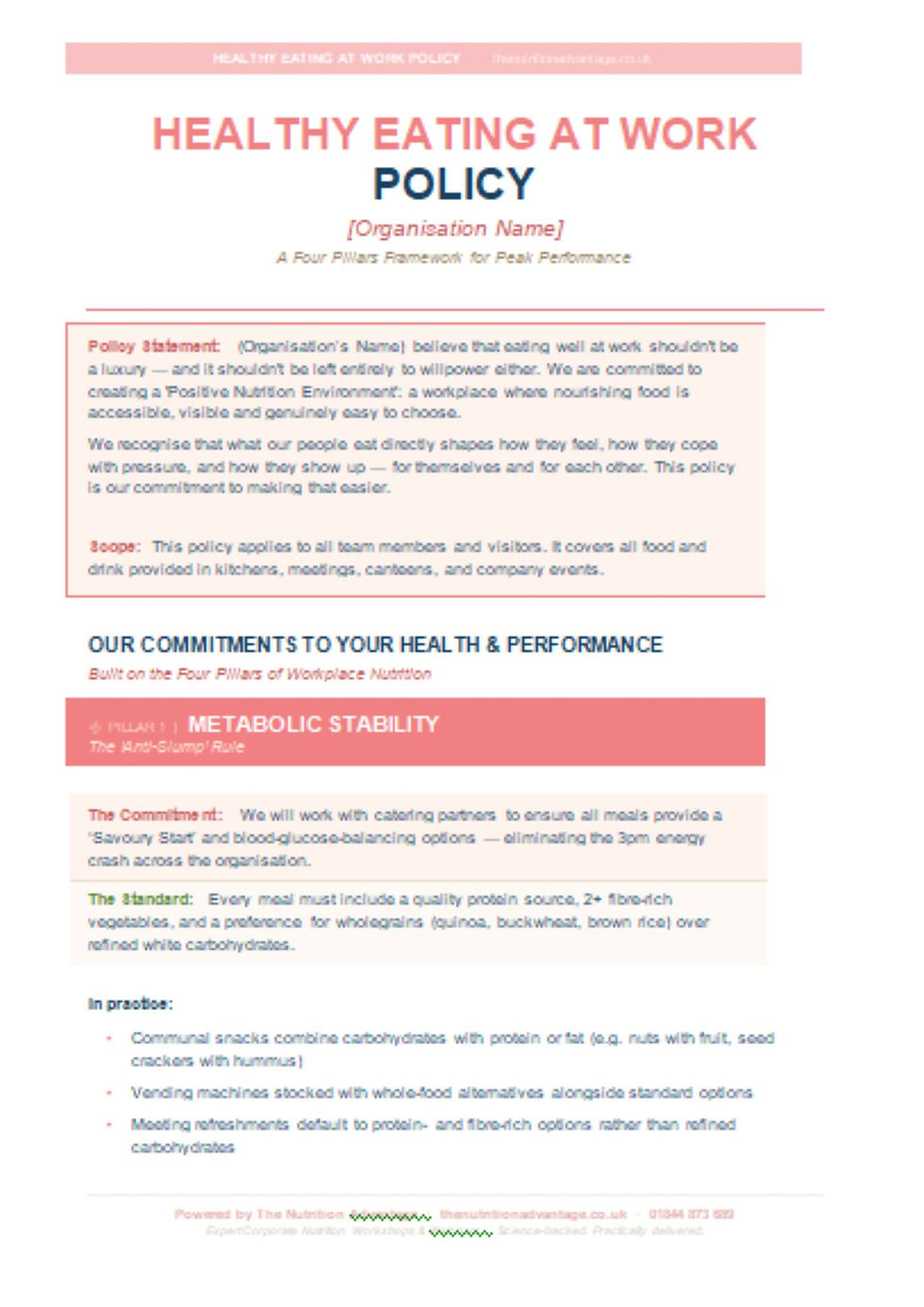
The Nutrition Advantage: Healthy Eating at Work Policy Framework
While the NHS Eatwell Guide provides a valuable foundation for public health, its goal is preventing nutritional deficiency across the general population — not equipping your workforce to sustain energy through a demanding afternoon, think clearly under pressure, or recover quickly from a stressful quarter.
That's where a workplace nutrition policy comes in.
A formal healthy eating at work policy moves nutrition from a vague good intention to a genuine organisational commitment — one that signals to your people that their health and energy at work actually matters.
Ready to make that commitment? We've done the heavy lifting for you.
>>>Download our free Healthy Eating at Work Policy template — a professionally designed, Four Pillars-based document your HR team can adapt and adopt in minutes. Simply add your organisation's name and it's ready to go.
.
9. Frequently Asked Questions About Workplace Nutrition
What is workplace nutrition?
Workplace nutrition — sometimes called corporate nutrition or nutrition at work — goes beyond basic healthy eating to focus on fuelling employees' metabolism, managing blood sugar balance, and supporting cognitive performance, mental health and immune resilience through evidence-based food strategies.
In practice, it is delivered through nutrition workshops, webinars, 1:1 consultations, food environment reviews and on-demand resources. The best employee wellbeing programmes treat it as a core pillar rather than an add-on — because the return on investment, in energy, focus, reduced sick days and staff retention, is measurable and significant.
What makes a successful workplace nutrition programme?
Evidence-based content — grounded in nutritional science, not wellness trends or generic healthy eating advice
Environmental design — making the healthy choice the easy choice, through reviewing what's stocked in kitchens, meeting rooms and vending machines
Workforce-specific — tailored to the realities of your team, whether that's shift workers, frequent travellers, desk-based employees or remote workers
Education, not just information — helping staff understand why food affects how they feel, so behaviour change sticks beyond the workshop
Measurable and ongoing — tracked through energy surveys, sickness absence data or engagement scores, and revisited at least annually rather than treated as a one-off initiative
Short-term challenges and fruit bowls alone don't move the needle. The organisations that see real results treat nutrition as a biological foundation — addressing energy, cognitive performance, stress resilience and immunity together rather than in isolation.
How much does the 3pm slump cost businesses annually?
Research into workplace presenteeism suggests the resulting drop in cognitive focus costs employers at least £3,600 per employee per year in lost output — equivalent to around 84 minutes of reduced productivity per employee, per day.
For a company of 50, that represents more than £180,000 in avoidable annual productivity loss.
A significant proportion of this is attributable to preventable metabolic instability — blood sugar crashes triggered by high-glycaemic lunches, inadequate protein and reliance on caffeine to push through the afternoon
Can nutrition programmes really reduce employee sick leave?
Yes. Data published in BMC Public Health demonstrates that targeted workplace nutrition interventions can reduce absenteeism by up to 27%.
A Brigham Young University study of 20,000+ employees found those who consistently prioritised healthy eating were significantly more resilient against the minor illnesses that account for the majority of single-day absences.
What is the most effective workplace nutrition strategy?
In my experience as a corpoate nutritionist, the most effective approach is the shift from reactive wellness — treating symptoms as they arise — to proactive nutritional design: structuring the food environment so that energy, focus and resilience are built in rather than bolted on.
In practice, this means addressing all four biological pillars simultaneously: metabolic stability, cognitive performance, stress resilience and immune health. One of the highest-impact starting points is the Power Pair principle — ensuring carbohydrates are always accompanied by protein or healthy fat, whether in canteen meals, meeting snacks or kitchen provisions. This single structural change stabilises the glucose response, prevents the 3pm slump and can reclaim meaningful productive time per employee, per day.
The organisations that see the greatest results don't rely on a single intervention. They combine nutritional changes in work environment with education — so staff understand why the changes matter and are equipped to make good choices independently.
What is the ROI of investing in corporate nutrition? According to Deloitte analysis, the ROI for proactive health and wellness initiatives is £3.44 for every £1 invested, realised through increased productivity, reduced absenteeism, lower presenteeism and improved staff retention. Some analyses place this figure as high as £4.70:1. Nutrition is one of the highest-leverage places to start — because it affects every one of those outcomes simultaneously, every single day.
We have a hybrid team — how can a nutrition programme work for everyone?
A modern corporate nutrition programme needs to work wherever your people are — and the evidence suggests that digital delivery can be just as impactful as in-person, sometimes more so.
Virtual corporate nutrition webinars consistently achieve high engagement precisely because they remove the friction of attendance. No travel, no room booking, no competing priorities — participation rates are often significantly higher than for equivalent in-person sessions. For global teams, recorded on-demand content ensures nobody misses out due to geography or time zones. Check out our 20 workshop ideas specifically for remote worker wellbeing.
For office-based teams, the focus shifts to the physical food environment. For remote and hybrid workers, digital webinars and virtual 1:1 consultations deliver the same quality of support at home. For international teams, portable nutrition strategies are designed to work across different food cultures, airports and hotels — so the programme travels with your people.
Whether your team is in one building or spread across multiple continents, the biological principles are the same.
How do you engage employees who aren't 'into' health?
I find that in reality most employees aren't disengaged from health — they're disengaged from being told what to eat and what not to eat.
Framing the conversation around energy, focus and simply feeling better at work tends to land very differently.
People want to get through a Friday afternoon without relying on caffeine and biscuits.
Starting with practical, relatable changes — like stabilising blood sugar and building energy that actually lasts — rather than nutrition rules and restrictions, is what makes our workshops consistently well-received, even among the sceptics who weren't sure why they'd been sent along.
The Workplace Nutrition Revolution Starts Now
We're at a tipping point. Employees are more nutrition-aware than ever. They're exhausted from ultra-processed foods, fed up with the 3pm slump, and genuinely want to feel better.
The workplaces that invest in nutrition as infrastructure will win. They'll attract better talent, retain their best people, and outperform competitors through sheer vitality.
• Energy balance eliminates the 3pm slump
• Cognitive nutrition sharpens focus and decision-making
• Stress resilience prevents burnout and emotional volatility
• Immune resilience reduces sick days by up to 27%
It's 2026. We know nutrition affects performance. We know simple changes create massive improvements. We know the ROI is real. The question isn't 'Should we do this?' It's 'Why haven't we done this already?'
Your team deserves to feel energised, focused, resilient and healthy. Ready to start? Begin with just one pillar. Make one small change this week. Then build from there.
→ The workplace nutrition revolution isn't coming. It's already here. Will you be leading it, or playing catch-up?
Ready to transform your team’s nutrition? Check out our Corporate Nutrition Services today →
About the Author
Steph Ley BSc (Hons), DipION, mBANT, mANP, mGNC is the founder of The Nutrition Advantage and one of the UK's leading corporate nutritionists.

She holds a First Class BSc in Business Management & Leadership from Exeter University and a Distinction-grade Nutritional Therapy qualification from the Institute for Optimum Nutrition (ION). She is a registered member of BANT, the ANP and GNC.
Having consulted for organisations ranging from top engineering companies and law firms to leading charities and events agencies, Steph specialises in supporting high-stakes, time-poor teams.
Her evidence-based approach rejects restrictive dieting in favour of metabolic optimisation — empowering professionals to turn their biological health into a measurable competitive advantage (one tasty bite at a time!).
Corporate Nutrition Workshops | Webinars | Strategy | Copywriting
01844 873 689 | Thame, Oxfordshire


Frequent travel can easily disrupt healthy eating habits, so practical tips like planning snacks, prioritising protein-rich meals, and staying hydrated can make a real difference in maintaining energy and focus. Workplace nutrition strategies also play a key role in supporting long-term health and productivity.Additional insights on metabolic health and longevity can be found here: https://www.pharmacyuk.com/why-omega-3-and-glp-1-nutrition-are-redefining-longevity-and-metabolic-health/